A breast lift with an autologous flap reshapes existing breast tissue without adding an implant; suitability depends on assessment.
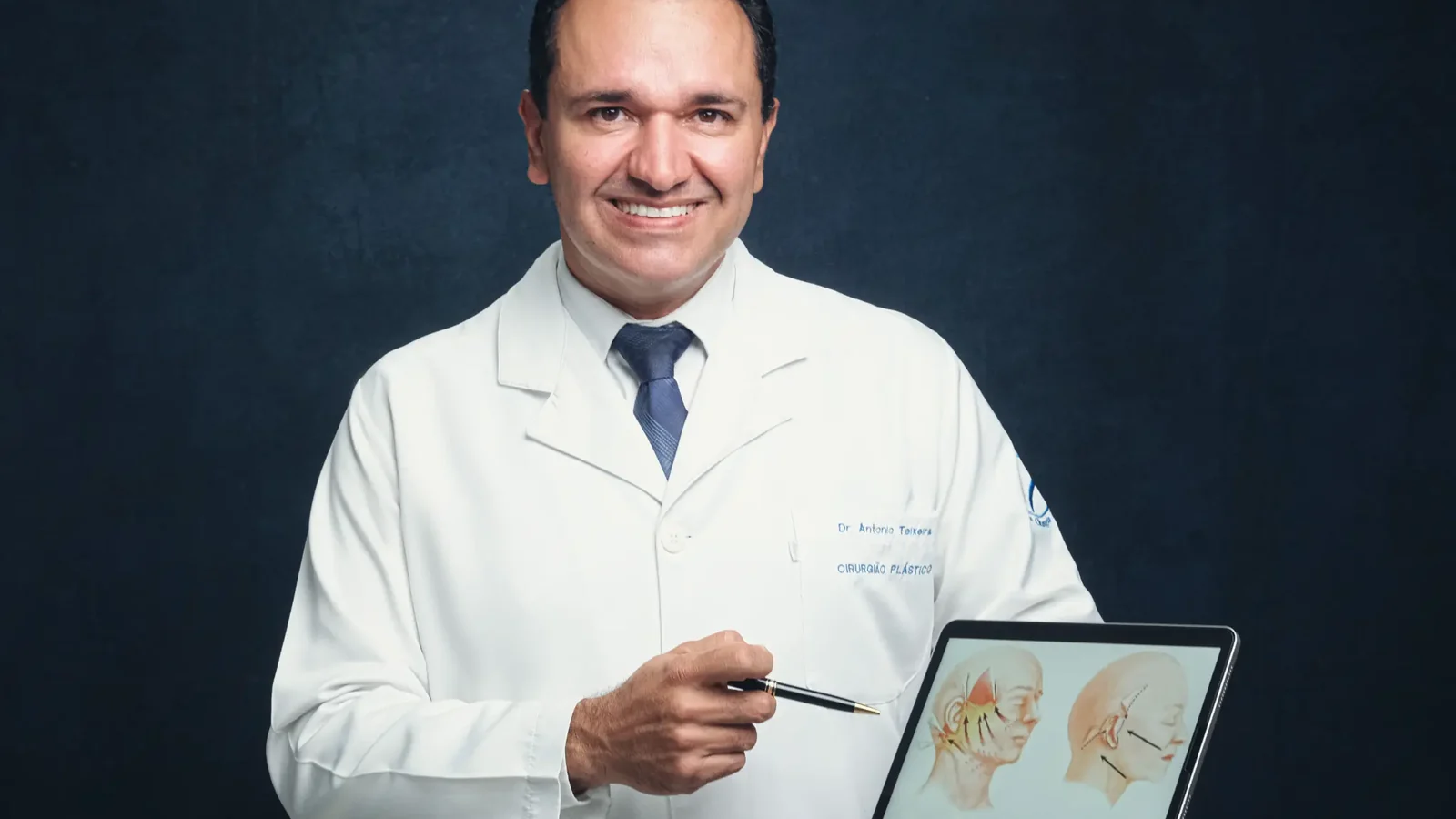
Dr. Antônio Teixeira is a plastic surgeon (CRM-GO 16.890 · RQE 8.380 · CRM-TO 2.067 · RQE 1.354) and Full Member of the Brazilian Society of Plastic Surgery (SBCP). This page explains the concept and its clinical limits; it does not determine an indication or predict an outcome.
Key considerations
A breast lift, or mastopexy, repositions the breast envelope and nipple–areola complex when sagging, also called ptosis, is present. In an autologous flap approach, a portion of the patient’s own breast tissue is preserved with its blood supply and rearranged within the breast to help restore or maintain shape. The technique may be described as a dermoglandular flap, meaning that skin and glandular tissue are designed and repositioned together rather than being discarded entirely.
This is not the same as inserting an implant. The available tissue comes from the breast itself, so the operation does not create unlimited volume. The surgeon must assess tissue mobility and circulation.
“Autologous” means tissue from the same person. It does not promise a specific contour, cup size, symmetry, or duration. Breast shape is influenced by aging, weight, pregnancy, hormones, skin quality, and tissue behavior.[1] [2]
Clinical context
The consultation reviews concerns, expectations, medical history, previous operations, pregnancies, weight trajectory, medications, allergies, nicotine exposure, and relevant examinations or imaging. It also considers breast volume, tissue distribution, ptosis, skin excess, asymmetries, scars, nipple–areola position, chest-wall shape, and skin quality.
The planning question is whether available tissue can be rearranged safely and consistently with the patient’s goals. The surgeon may discuss mastopexy with or without implants, tissue rearrangement, staged treatment, or no operation. Compare breast lift with and without implants and breast implants.
A stable weight may be relevant because future weight change can alter breast volume and skin tension. Updated imaging or coordination with a breast-care physician may be appropriate according to symptoms, age, examination, or screening history. The plan should define scars, tissue limits, possible asymmetry, and situations requiring an intraoperative change.
| Evaluation factor | Why it matters to the discussion |
|---|---|
| Breast volume and distribution | Determines how much tissue may be available for reshaping. |
| Ptosis and skin excess | Influences the lift pattern and likely scar design. |
| Previous surgery or scars | May affect blood supply, tissue mobility, and planning. |
| Weight, pregnancy, and breast changes | Can alter tissue behavior and long-term shape. |
| Health, medications, nicotine, and healing risks | Helps establish whether surgery is appropriate and how to reduce avoidable risks. |
Appropriate timing
An autologous-flap breast lift may be discussed when a patient has breast ptosis, sufficient existing tissue for rearrangement, and an interest in lifting and reshaping without placing an implant. It can also be considered when the clinical objective includes using or remodeling tissue that would otherwise be removed during a mastopexy. The possible relevance of the technique must be balanced against breast size, tissue quality, the amount and distribution of excess skin, and the patient’s desired change.
The literature includes a small series after significant weight loss in the *Revista Brasileira de Cirurgia Plástica*.[1] A retrospective series also discussed reshaping after implant removal (explantation).[2] Both are selected reports, not predictions for an individual. They can inform a consultation but cannot replace examination or individualized consent.
The discussion may be unsuitable when tissue is insufficient, the desired volume requires another procedure, or medical factors make elective surgery unsafe. The conclusion may be to defer surgery, investigate a breast concern, modify risks, or choose another plan.
Limits and risks
The main limitation is that the procedure works with the patient’s existing breast tissue. The amount of tissue, its position, its blood supply, and the skin envelope constrain the possible reshaping. The operation may improve ptosis and contour without producing identical breasts or eliminating all asymmetry. Scars are expected, and their final appearance varies with genetics, skin characteristics, tension, wound healing, and time.
General surgical risks include bleeding, infection, fluid collection, delayed wound healing, unfavorable scarring, changes in breast or nipple sensation, asymmetry, contour irregularities, persistent pain, and the need for revision. Tissue compromise or fat necrosis can occur when part of the rearranged tissue does not receive adequate circulation. Additional procedures may be considered if healing, shape, symptoms, or patient goals warrant them. Anesthesia and individual medical conditions add their own risks, which should be reviewed with the responsible surgical and anesthesia teams.
The patient should tell radiology professionals about prior operations and scars. New lumps, persistent pain, skin changes, nipple discharge, or other symptoms require clinical evaluation rather than automatic attribution to surgery.
Breastfeeding when applicable
Breastfeeding after a breast lift cannot be assured or ruled out in advance. The possibility may be influenced by previous operations, tissue rearrangement, the relationship between the nipple–areola complex and milk-producing tissue, anatomy, and other factors. Some patients breastfeed after surgery; others may need supplementation.
Future pregnancy may change breast shape and skin. If breastfeeding is a priority, discuss it before surgery.
Recovery
Recovery varies with the operation, health, and healing. Early care commonly includes prescribed pain control, wound instructions, limits on exertion, and follow-up. Swelling, tightness, bruising, temporary sensory changes, and side-to-side differences can occur initially.
Return to work, driving, exercise, and lifting follows the surgeon’s instructions. Nicotine can impair circulation and healing. Urgent contact may be needed for increasing pain, marked one-sided swelling, fever, drainage, skin color changes, shortness of breath, or other concerning symptoms.
Preparation and aftercare information is available in guidance. An online conversation can organize questions but does not replace examination; see online consultation.
Frequently asked questions
Does an autologous flap mean that an implant will not be used?
The term generally refers to rearranging the patient’s own breast tissue. Whether an implant is appropriate is a separate decision and should not be assumed from the page title. The plan depends on anatomy, goals, tissue availability, and informed discussion.
Can this technique create more breast volume?
It can redistribute and reshape existing tissue, but it cannot create unlimited new volume. If the desired change depends on a substantial increase in volume, the consultation should address the limits of an autologous approach and discuss alternatives without presuming that any one technique will be selected.
Will the breasts be perfectly symmetrical?
Perfect symmetry cannot be promised. Pre-existing differences in volume, position, chest-wall shape, skin, and nipple–areola anatomy may remain, and healing can produce additional variation. The aim of planning is to address asymmetry as reasonably as safety and tissue conditions allow.
Will there be scars?
A lift requires incisions, and scars are an expected part of the procedure. Their pattern depends on the degree of ptosis, skin excess, tissue arrangement, and surgical design. Scar maturation is gradual and differs among individuals.
Can I breastfeed after surgery?
Breastfeeding may remain possible, but it cannot be assured. The likelihood depends on anatomy, the operation, prior surgery, and individual lactation factors. If future breastfeeding matters, mention it before a decision.
How long will the result last?
The breast will continue to age and may change with pregnancy, weight variation, hormonal changes, and skin elasticity. A consultation can explain factors that may influence durability, but no fixed duration or permanent appearance can be promised.
Is this operation appropriate after major weight loss or implant removal?
It may be discussed in selected cases. Published reports after weight loss and after explantation provide clinical context, not a prediction for an individual patient.[1] [2] The decision requires examination of tissue volume, skin excess, scars, healing risks, and goals.
What should I bring to the consultation?
Bring information about previous operations, medications, allergies, nicotine use, pregnancies, breastfeeding plans, recent imaging, and relevant conditions. Describe the change you seek and limitations you consider unacceptable.
References
1. Revista Brasileira de Cirurgia Plástica (2019), “Autologous breast reconstruction after massive weight loss,” DOI: 10.5935/2177-1235.2019RBCP0088 2. Procikieviez et al., *Journal of Plastic, Reconstructive & Aesthetic Surgery* (2026), retrospective study after explantation, PMID: 42501420 3. American Society of Plastic Surgeons, “Breast lift vs. breast augmentation vs. breast implants”
*Educational content only. In-person assessment and appropriate investigation determine the indication, technique, risks, and treatment plan.*