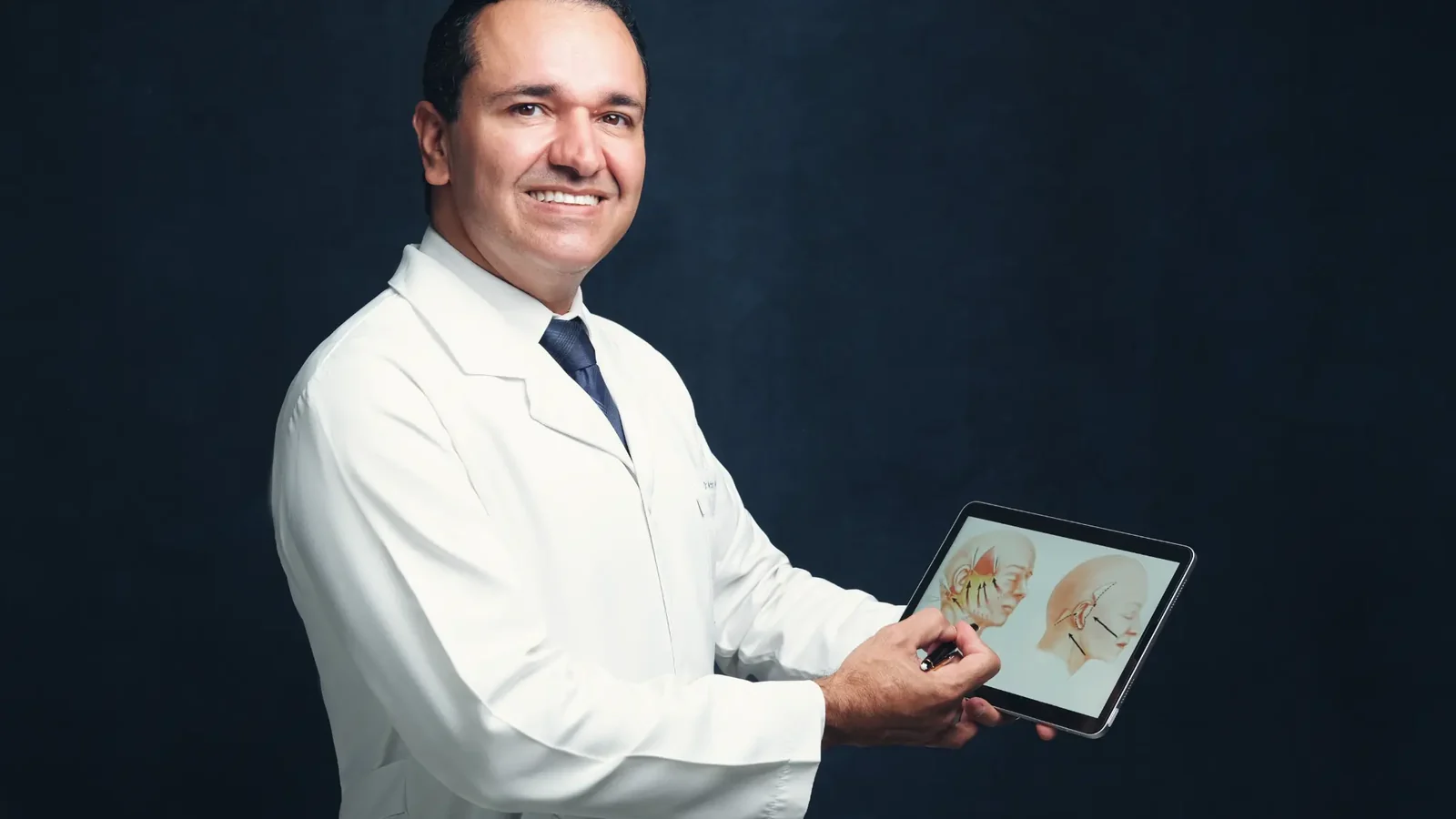
This page explains how breast shape, available tissue, skin quality, and individual safety factors influence the discussion of surgical approaches.
Key considerations
Breast surgery is not a single technique. The same concern—loss of upper-pole fullness, breast drooping, asymmetry, excess skin, or changes after weight loss—may be discussed through different combinations of reshaping, skin adjustment, volume replacement, or tissue reduction. The appropriate approach can only be considered after an examination, a review of medical history, and, when indicated, complementary investigation.
One group of approaches uses dermoglandular flaps. In this context, the surgeon rearranges and supports existing breast tissue, together with its skin and glandular components, during a breast lift or related reshaping procedure. The intention is not to suggest that tissue can be moved in the same way for every person. The available volume, its distribution, tissue quality, degree of ptosis, amount of excess skin, scars, and the desired change all affect whether this discussion is clinically reasonable.
A flap-based discussion is distinct from adding an implant. An implant is a manufactured device for volume; tissue remodelling works with existing breast tissue. Plans may combine lifting with an implant, reduction, reshaping without an implant, or no surgery if risks outweigh potential benefit. The American Society of Plastic Surgeons comparison of breast lift, augmentation, and implants provides an introductory overview, not an individualized recommendation [3].
Clinical context
The consultation identifies what the patient wants to change and what should be preserved. Examination considers breast volume, skin envelope, nipple position, breast-base width, asymmetry, tissue thickness, elasticity, previous operations, and scars. General health, nicotine exposure, medications, pregnancy plans, breastfeeding history, weight stability, and screening needs also matter.
Photographs, measurements, and examination findings organize the discussion but do not replace clinical judgment. Imaging may be requested according to age, symptoms, family history, screening status, or consultation findings. Priorities such as added volume, a higher position, reduced weight, asymmetry correction, limited implant use, and acceptance of scars also shape the plan.
| Main element considered | Why it matters for the approach |
|---|---|
| Existing tissue volume and distribution | Determines whether reshaping or internal support can be discussed without adding volume. |
| Skin excess and elasticity | Influences the extent of skin adjustment and the pattern of scars. |
| Ptosis and nipple position | Helps define the lifting component and the limits of repositioning. |
| Previous scars or surgery | Can affect tissue blood supply, planning, and risk assessment. |
| Goals, health, and future plans | Balances the desired change with recovery, safety, and possible later changes. |
A consultation should explain alternatives, uncertainties, staged treatment when relevant, and the option of not operating. The page on breast surgery offers broader educational context, while breast lift with and without implants and breast implants address related topics.
Appropriate timing
A dermoglandular-flap approach may enter the conversation when there is enough suitable breast tissue to be remodelled and the principal objective is to improve shape or position rather than simply increase size. It may also be discussed when a person wishes to avoid an implant, although avoiding an implant does not mean avoiding surgery, scars, recovery, or the possibility of residual asymmetry.
The literature includes a small series after substantial weight loss [1] and a retrospective series after implant removal, or explantation [2]. These publications illustrate planning concepts, but their patient groups and outcomes cannot be transferred automatically to an individual case.
The discussion may be relevant after weight change, pregnancy, aging, or implant removal when examination supports it. Limited tissue, marked laxity, asymmetry, medical conditions, nicotine use, or expectations may require another plan, preparation, or postponement. A technique should never be selected from a photograph or name alone.
Limits and risks
Every breast operation involves trade-offs. Possible issues include bleeding, infection, fluid collection, delayed healing, unfavorable scars, altered nipple or breast sensation, asymmetry, contour irregularity, recurrent drooping, fat necrosis, revision, and dissatisfaction. More serious complications can occur. Risk depends on the procedure, tissue, health conditions, medications, nicotine exposure, and recovery.
A dermoglandular flap also has technical limits. The tissue must remain adequately perfused, and the surgeon must account for the effect of mobilization, tension, and skin closure. A flap cannot create unlimited volume or eliminate the biological effects of aging, pregnancy, weight fluctuation, or tissue healing. Scar location and length are part of consent, and maturation continues for months.
No educational page can determine candidacy. If a patient has a breast lump, nipple discharge, skin retraction, persistent pain, infection, or a new unilateral change, the priority is appropriate medical investigation rather than elective reshaping. The guidance page may provide general preparation information, but it does not replace an individualized consultation.
Breastfeeding when applicable
Breastfeeding capacity after breast surgery varies. Operations that lift or reshape the breast may preserve some ducts and glandular connections, but surgical manipulation around the nipple-areola complex can affect sensation and milk transfer. Previous surgery, anatomy, pregnancy-related changes, and other factors also matter. No technique can promise a particular breastfeeding outcome.
Patients who may become pregnant should discuss timing and future plans. Pregnancy and breastfeeding can change breast volume, skin, and position, possibly requiring later reassessment.
Recovery
Recovery depends on the extent of lifting, reshaping, reduction, implant use, previous scars, and the person’s health. Early swelling, bruising, tightness, altered sensation, and temporary asymmetry may occur. Activity restrictions, wound care, support garments, medication instructions, and follow-up appointments are individualized. Return to work and exercise should be guided by the operating team, not by a generic calendar.
Increasing redness, fever, worsening pain, significant bleeding, shortness of breath, or sudden swelling require prompt contact with the surgical team or urgent assessment. Follow-up matters because healing evolves over time.
Patients can review general information through online consultation, recognizing that remote discussion cannot replace examination.
Frequently asked questions
Is a dermoglandular flap the same as a breast implant?
No. A dermoglandular flap uses and reshapes existing breast tissue, whereas an implant is a manufactured device placed to add volume. Some operations may combine different components, but the choice depends on examination findings, goals, and safety rather than on a universal formula.
Can this approach avoid scars?
No breast lift or reshaping procedure can be planned as scar-free. The scar pattern depends on the amount of skin adjustment, breast shape, previous scars, and the chosen operation. Scar quality also varies with healing biology and aftercare.
Will the technique be chosen automatically from my measurements?
No. Measurements are useful, but they are only one part of evaluation. Tissue quality, blood supply, asymmetry, medical history, future plans, preferences, and the balance between potential benefit and risk must also be considered.
Is this approach suitable after implant removal?
It may be discussed in selected cases after explantation, particularly when there is enough remaining tissue and skin management is needed. A retrospective publication describes one clinical series [2], but that evidence does not predict an individual result or establish that the approach is appropriate for every patient.
Can surgery after weight loss use existing breast tissue?
It may be considered in selected patients after weight reduction, depending on tissue volume, distribution, skin excess, scars, and health. A small published series provides context [1], but a study population cannot replace an examination or predict an individual outcome.
How long should I wait after weight loss, pregnancy, or breastfeeding?
Timing is individualized. Stable weight, recovery after pregnancy or breastfeeding, general health, and the patient’s future plans are usually discussed before elective surgery. The surgeon may recommend waiting when ongoing changes could alter planning or increase risk.
What should I bring to the consultation?
Bring a list of medications and allergies, relevant medical and surgical history, breast imaging or screening reports, information about nicotine use, and questions about goals, scars, breastfeeding, recovery, and alternatives. It is also useful to explain what change is most important and what trade-offs you would not accept.
References
[1] Revista Brasileira de Cirurgia Plástica (2019), report on dermoglandular flap use after weight loss. https://doi.org/10.5935/2177-1235.2019RBCP0088
[2] Procikieviez et al., *Journal of Plastic, Reconstructive & Aesthetic Surgery* (2026), retrospective series after explantation. PubMed PMID 42501420
[3] American Society of Plastic Surgeons, “Breast lift vs. breast augmentation vs. breast implants.” https://www.plasticsurgery.org/news/blog/breast-lift-vs-breast-augmentation-vs-breast-implants
This is educational content; in-person evaluation defines indication, technique, risks, and the treatment plan.